Skip to content

The Nine Pillars

A coherent architecture for making the world more visible

Commons World is built through nine interlocking Pillars, each designed to strengthen visibility, verification, public memory, accountability, learning, participation, and continuous improvement.

How to read this page

Not nine separate ideas. One connected architecture

Each Pillar has its own role. The strength of Commons World comes from how they reinforce one another.

What a Pillar is

A proposed institution with one clear purpose — defining, preserving, verifying, translating, protecting, teaching, connecting, or improving.

How they reinforce each other

A finding needs memory. Memory needs verification. Verification needs public understanding. No single Pillar carries Commons World alone.

Where each is specified

Every card below opens onto its full specification — architecture, technical requirements, interdependencies, and implementation pathway.
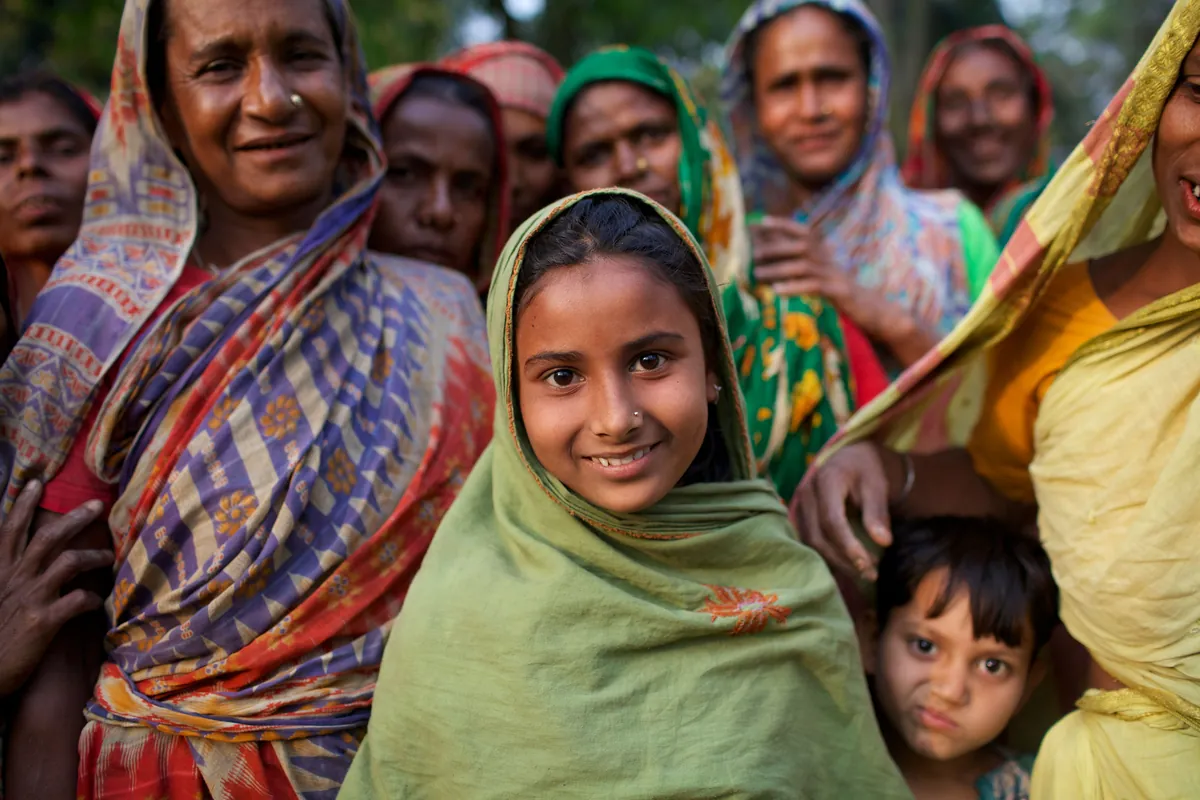
A girl sitting among a group of elder women, listening.

Why the Pillars exist?

One connected architecture, not nine separate ideas

The commons is what a community holds and sees together — its knowledge, its memory, its accountability to itself. A society can only respond to what it can see.

Each of the nine Pillars strengthens one part of that shared visibility: verification, public memory, accountability, learning, participation. None of them stands alone.

The Architecture

The nine Pillars

Nine institutions, one interlocking architecture. Open any card for the full specification.

Planetary Coherence Health

Global authority for planetary health standards and accountability.

Pillar I Read the full entry ↓

Alliance for Transparent Enterprise

Independent audit and accountability for global enterprise.

Pillar III Read the full entry ↓

Commons Bank & Commons Unit of Exchange

Sovereign financial infrastructure outside dollar hegemony.

Pillar V Read the full entry ↓

The specifications below are the working architecture. The full treatment of all nine Pillars — with the research, principles, and practical implications behind each — arrives in The Visible World, the founding book, in print in 2027.

Three people sitting together on a bench, talking.

Where it starts

Every Pillar depends on people, close to home

Participation without rights can become extraction — so the architecture is built to work from where people already are, in their own communities, not around them.

The specifications on this page describe institutions. What makes them real is participation, one community at a time.

In Detail

Every Pillar, fully specified

Pillar 1

Planetary Coherence Health

PCH is the global authority for planetary health standards — the institution that sets, monitors, and enforces the conditions under which human civilisation can continue to operate on Earth. It fills the gap between climate science and binding global action.

Primary domains Human Flourishing · Ecological Integrity · Material & Technological Safety · Social Cohesion & Participation · Systemic Resilience · Intergenerational Stewardship

Full specification
Architecture
PCH is governed by an elected body drawn from member nations, scientific institutions, and civil society. Governing body selection follows a dual-track process: scientific representatives are nominated by accredited research institutions; civic representatives are selected through a commons participation process open to registered Commons World participants. PCH operates six Baseline Domains as its measurement and governance framework.
Technical requirements
  • Global monitoring network — satellite, ground-based, and ocean sensor infrastructure
  • Contested evidence handling protocol — peer-reviewed adjudication process for disputed data
  • Baseline process engine — continuous scoring against six Baseline Domains
  • AURA integration — PCH alerts and public health data delivered via Commons Alert (CAl)
  • CB & CUE integration — PCH compliance linked to Commons Bank access conditions
Interdependencies
Implementation pathway
  • Global sensor network (can begin with existing data partnerships)
  • International legal instrument — EL ratification required for binding authority
  • PCH governing body selection process — requires the Participation Database
  • PCH Secretariat — permanent institution with independent funding

Pillar 2

Commons Registry

CR is a transparent, verifiable, and publicly accessible ledger of Earth’s shared resources. It answers the question: who holds what, under what conditions, and with what obligations to the commons?

Full specification
Architecture
CR operates through a distributed network of CommonNodes — verified registry nodes operated by accredited institutions, governments, and civil society organisations. Each node maintains a local copy of the registry and participates in consensus verification. GeoNFTs provide tamper-evident, location-specific records of resource claims. Natural Capital Cells aggregate ecological data at the watershed, biome, and ecosystem level.
Technical requirements
  • CommonNode network — distributed registry infrastructure with consensus protocol
  • GeoNFT issuance — tamper-evident resource claim records
  • Natural Capital Cell mapping — ecological aggregation at multiple scales
  • Authorised deposit pathways — the process by which new resource claims are registered
  • AURA integration — Commons Maps (CM) provides public interface to the CR database
  • ATE integration — CR records feed enterprise audit
Interdependencies
Implementation pathway
  • CommonNode software — open source, deployable by any accredited institution
  • Initial registration drive — priority regions identified by PCH
  • Legal framework — resource claim registration requires EL participation
  • Dispute resolution protocol — contested claims adjudication process

Pillar 3

Alliance for Transparent Enterprise

ATE provides independent audit and accountability for global enterprise. No corporation operating at scale within the Commons World framework can do so without ATE compliance. Transparency is not optional — it is the price of operating.

Primary domains Environmental impact and ecological obligation · Labour conditions and worker rights · Financial transparency and tax compliance · Supply chain integrity · Governance and anti-corruption · AI and technology accountability

Full specification
Architecture
ATE operates through independent investigator panels convened on a case-by-case basis. Investigations can be initiated by PCH, CR, GAR, civil society organisations, or the ATE Secretariat itself. ATE covers six audit domains. Findings are published in full. An Upgrade Pathway allows enterprises to remediate findings and achieve compliance.
Technical requirements
  • Investigation initiation protocol — formal trigger and scope-setting process
  • Investigator governance — selection, independence, and conflict-of-interest management
  • Evidence handling — secure, auditable document management
  • Findings publication — mandatory public disclosure
  • Upgrade Pathway — structured remediation and re-audit process
  • Post-finding lifecycle — monitoring, compliance verification, sanctions pathway
Interdependencies
Implementation pathway
  • ATE Secretariat — independent institution, foundation-funded
  • Investigator accreditation process
  • Legal recognition — requires EL ratification in member jurisdictions
  • Enterprise registration — all enterprises above threshold size required to register

Sovereignty is not conferred from above. It is a capacity that exists in you.

Commons Community

Pillar 4

Global Accountability Rating

GAR scores nations on how well they serve their citizens — and publishes the results for the world to see. Where markets rate governments on creditworthiness, GAR rates them on human and ecological performance.

Primary domains Health and human flourishing · Education and capability development · Economic inclusion and equity · Environmental stewardship · Governance integrity and anti-corruption

Full specification
Architecture
GAR operates a continuous scoring methodology across five dimensions. Scores are calculated from verified data sources including PCH baseline outputs, CR ecological records, ATE findings, and independent civil society submissions. Ratings are published quarterly. Nations may appeal scores through a formal adjudication process.
Technical requirements
  • Scoring engine — weighted composite across five dimensions
  • Data ingestion — automated feeds from PCH, CR, ATE and verified third-party sources
  • Appeals protocol — formal adjudication with independent panel
  • Publication infrastructure — open access ratings database
  • AURA integration — GAR scores accessible via Commons Verify (CV) and Commons Vote (CVo)
Interdependencies
Implementation pathway
  • Scoring methodology — independently peer-reviewed and published
  • Data partnerships — agreements with PCH, CR, ATE, and third-party data providers
  • Initial publication — first ratings require minimum 12 months of verified data
  • Nation participation — voluntary at launch, required for EL membership

Pillar 5

Commons Bank & Commons Unit of Exchange

CB is the sovereign banking infrastructure of Commons World. CUE is the Commons Unit of Exchange — a unit of account and exchange designed to operate outside dollar hegemony and serve the 1.4 billion people currently excluded from formal financial systems (World Bank, 2021).

Full specification
Architecture
CB operates as a non-commercial sovereign institution. It issues CUE, manages Commons Bonds, provides microfinance to unbanked populations, and verifies international remittances. CB governance is held by the Commons World Stewardship Foundation with independent oversight. CUE is not a cryptocurrency — it is a unit of exchange with governance, issuance controls, and accountability mechanisms.
Technical requirements
  • CUE issuance engine — governed issuance with transparent supply controls
  • Commons Bonds — issuance, trading, and redemption infrastructure
  • Microfinance platform — direct lending to unbanked individuals and communities
  • Remittance verification — low-cost international transfer with CR-verified identity
  • AURA integration — Commons Bank (CB) and Commons Pay (CP) features on AURA device
  • ATE integration — CB compliance audited by ATE under financial transparency domain
Interdependencies
Implementation pathway
  • Legal instrument — CB requires EL ratification as a recognised financial institution
  • CUE issuance framework — monetary policy rules published and independently audited
  • Initial capitalisation — Commons Bonds backed by founding member nation commitments
  • AURA rollout — CB/CUE usability depends on AURA device availability or web interface

Pillar 6

AURA

AURA — Autonomous Unified Rights Architecture — is a purpose-built sovereign hardware device. It runs Commons OS on a peer-to-peer mesh network backbone. It is not a smartphone. It does not answer to any platform, corporation, or state. Your data stays yours.

Full specification
Architecture
AURA is a dedicated hardware device running a sovereign Commons OS. It connects via a peer-to-peer mesh network — no central server dependency, no telecoms infrastructure requirement. Commons ID replaces telephone numbers within the AURA environment. eSIM was explicitly considered and rejected: dependency on telecoms infrastructure contradicts the sovereignty principle at AURA’s core.
Technical requirements
  • Hardware: purpose-built device, Commons OS, mesh network radio
  • Network: peer-to-peer mesh — no central server, no telecoms dependency
  • Identity: Commons ID — unique, portable, non-telecoms identifier
The 24 features
  • CMCommons Messenger
  • CPCommons Phone
  • CVaCommons Vault
  • CBiCommons Biometric
  • CPaCommons Pay
  • CSCommons Safe
  • CLoCommons Location
  • CWeCommons Wellbeing
  • CBCommons Bank
  • CWaCommons Wallet
  • CVCommons Verify
  • CAlCommons Alert
  • CICommons ID
  • CHRCommons Health Record
  • CVoCommons Vote
  • CCCommons Contribute
  • CLRCommons Learning Record
  • CTCommons Trust
  • CTiCommons Time
  • CTrCommons Translate
  • CGCommons Guard
  • COCommons Organiser
  • CNCommons News
  • CMsCommons Maps
Interdependencies
Implementation pathway
  • Hardware design and manufacturing partnership
  • Commons OS development — open source, audited
  • Mesh network protocol — peer-reviewed and published
  • AURA Registry — identity and device registration system
  • Initial rollout — priority regions identified by PCH and EL

Twelve crises. Twelve hidden architectures. Twelve plausible repairs.

The Hidden World

Pillar 7

Commons Education

CE is the educational infrastructure of Commons World. It provides the curriculum, the training pathways, and the learning records that enable the next generation of practitioners to build and operate Commons World institutions.

Full specification
Architecture
CE comprises two tracks: Commons Learning (CL) — a 23-subject curriculum for general learners — and Commons Academy (CA) — nine Pillar-specific training pathways for practitioners. Commons Learning Records (CLR) are stored on AURA and are portable, verifiable, and owned by the learner.
Technical requirements
  • 23-subject CL curriculum — full content development
  • 9 CA pathways — one per Pillar, with modular course structure
  • CLR system — verifiable learning record integrated with AURA
  • Delivery platform — accessible via web and AURA device
  • CE contributor pathway — open process for curriculum development

Pillar 8

One Story Network

OSN is commons-owned media infrastructure. It provides a publishing and distribution platform that resists capture by commercial or state interests. The story of the world belongs to all of us.

Full specification
Architecture
OSN operates Commons News (CN), Commons Search (CS), and an open publishing platform. Editorial independence is protected by the OSN governance charter. OSN content is delivered via AURA’s Commons News feature and via the open web.
Technical requirements
  • OSN publishing platform — open source, federated architecture
  • CN feed — curated, editorially independent news service
  • CS — commons-owned search index, no algorithmic manipulation
  • AURA integration — CN delivered via Commons News feature on AURA
  • OSN governance charter — editorial independence protection

Pillar 9

Evolutionary League

EL is the political vehicle of Commons World. It is a voluntary coalition of nations, cities, and institutions that have adopted Commons World standards and participate in its governance. It is not a world government. It is the mechanism through which the framework reaches operational scale.

Full specification
Architecture
EL membership is voluntary. Member nations agree to implement Commons World Pillar standards within their jurisdictions, contribute to EL governance, and maintain GAR scores above the EL minimum threshold. EL provides the legal recognition that gives CB, CUE, PCH, and ATE binding authority in member jurisdictions.
Technical requirements
  • EL membership treaty — legal instrument for ratification
  • EL governance body — voting, representation, decision-making processes
  • GAR integration — membership conditional on minimum GAR score
  • CB & CUE legal recognition — EL ratification enables CUE as recognised exchange unit
  • PCH and ATE binding authority — EL ratification converts standards into legal obligations

In Numbers

The architecture, honestly counted

9

Pillars

12

Priority challenges

6

Baseline domains

2

Free books

A society can only respond to what it can see

  • A finding without memory can disappear.
  • Memory without verification can become noise.
  • Verification without public understanding can remain unused.
  • Ratings without evidence can become branding.
  • Learning without participation can become passive.
  • Participation without rights can become extraction.
  • When contribution is unrecognised, the work that sustains society is often undervalued.
  • Innovation without coherence can produce harm faster than wisdom can respond.

The Nine Pillars are a proposed response to that condition — not by asking for blind faith, but by making the evidence, consequences, and responsibilities easier to see.

The full architecture is in the books

This page offers a first overview. The Hidden World follows the evidence Pillar by Pillar, and the complete architecture arrives in The Visible World, in print in 2027.

Contact & partnerships