
Participate
Start a Commons Community
Bring one other person, choose one question, and leave with one next step. You do not need fees, a formal structure, or permission.
- 2+ people
- 1 shared guide
- 1 action to take forward
- 0 fees or permissions

The idea
What is a Commons Community?
It is any group that meets regularly and honestly to understand one part of Commons World, connect it to life where they are, and decide what to do next. There is no central organiser and no permanent leader. The shared guide holds the format; the people in the room make the meeting their own.
- No hierarchy
- Local and self-organised
- One action at every meeting
The first meeting
A simple format you can use immediately
Prepare one question, then move through five clear stages. The format creates enough structure to keep the conversation purposeful without controlling what the group discovers.
In the room
-
Open
Shared attentionSomeone reads the chosen Pillar or challenge aloud while the group simply listens.
-
Inner Being
5 minutesThe group becomes still together, creating the attention needed for a useful conversation.
-
Discuss
Every voice mattersSpeak from experience, listen to understand, and examine the question without needing immediate agreement.
-
Act
One concrete next stepClose with one thing to carry until the next meeting, specific enough for the group to return to.
-
Return
Begin the next meeting hereCheck what people noticed, did, and learned. What is learned becomes the starting point for the next decision.
The guide gives you the reading, the meeting format, and the questions to begin with.
Send me the free meeting guideHolding the room
The quality of attention shapes the conversation
The facilitator does not supply the answers. Their job is to protect the conditions in which people can listen, disagree honestly, and think together.
No one has to agree with everything here. Disagreement, honestly expressed, is more useful than polite agreement.
Speak from your own experience. “I think” and “I’ve noticed” are more honest than “everyone knows” and “it’s obvious that”.
Listen to understand, not to respond. The quality of attention in the room decides the quality of what the room produces.
Read all meeting principles
- What is shared in the room stays in the room, unless everyone agrees otherwise.
- No one leads permanently. The role of facilitator rotates, and the Commons Community belongs to everyone equally.
A Commons Community does not prescribe who may lead, only what leadership must look like: long-term in orientation, collaborative in method, and grounded in care, stewardship, and service.
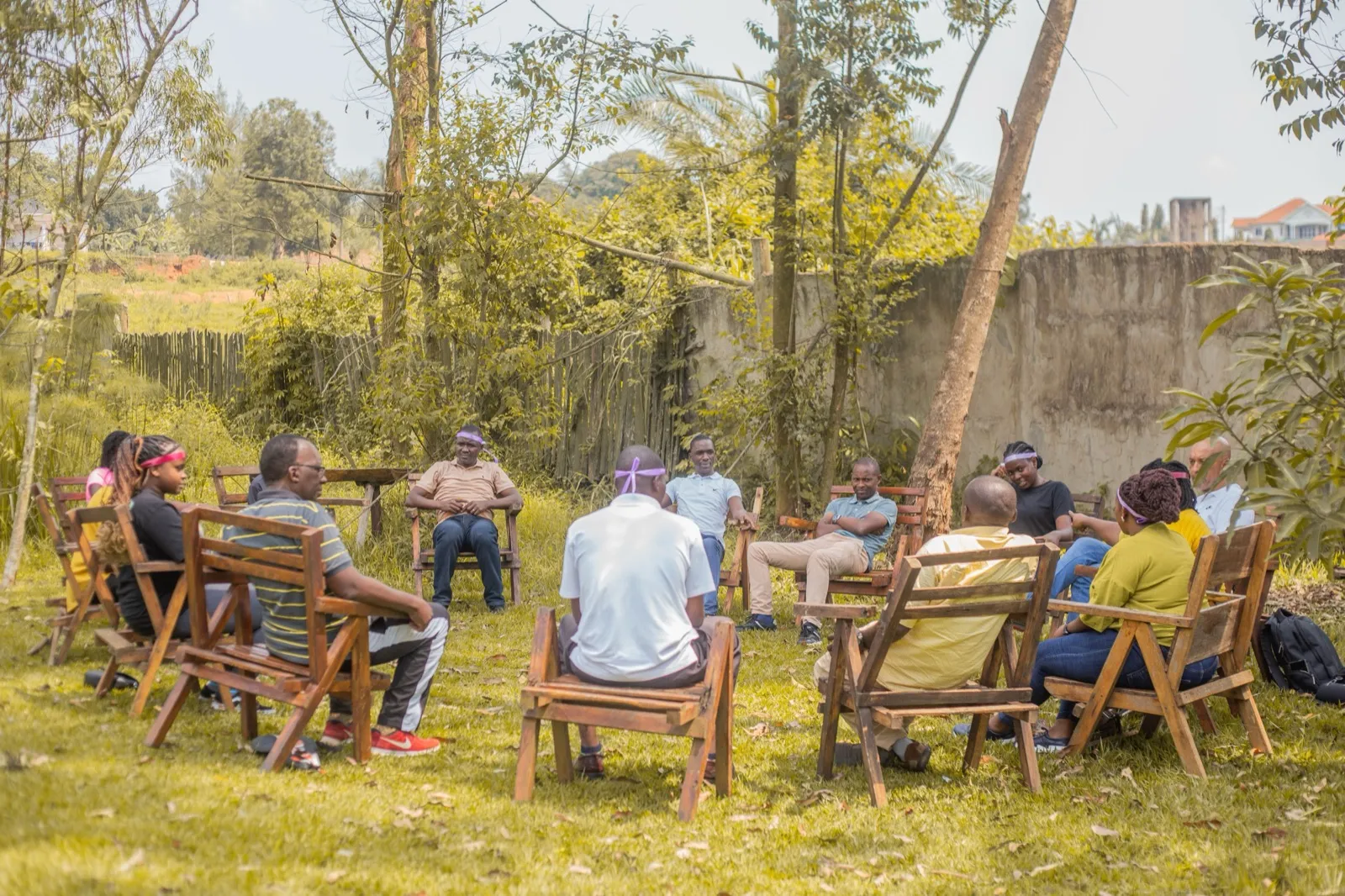
The inner ground
Why every meeting begins with five minutes of stillness
A useful conversation asks people to notice their reactions before acting from them. Five quiet minutes help the room slow down, listen more carefully, and meet the question with attention rather than pressure.
The books explain the longer practice and the sources behind it. Read the full practice and sources
The five-minute meeting version
- Sit comfortably and let the body become still.
- Notice the breath without trying to control it.
- When attention wanders, return quietly to the breath and the silence.
Open the complete home practice
- Sit comfortably, spine upright, hands resting gently in your lap.
- Place one hand lightly on your heart, then lower it and rest your awareness there.
- Close your eyes. Breathe naturally and simply notice the breath without controlling it.
- Recall something you genuinely appreciate. Let the feeling arise, then release it into silence.
- When the mind wanders, use a quiet word to return to the breath, the heart, and the silence.
- When your time is complete, sit quietly for a minute before opening your eyes slowly.
Take it into the room
Everything you need for the first meeting
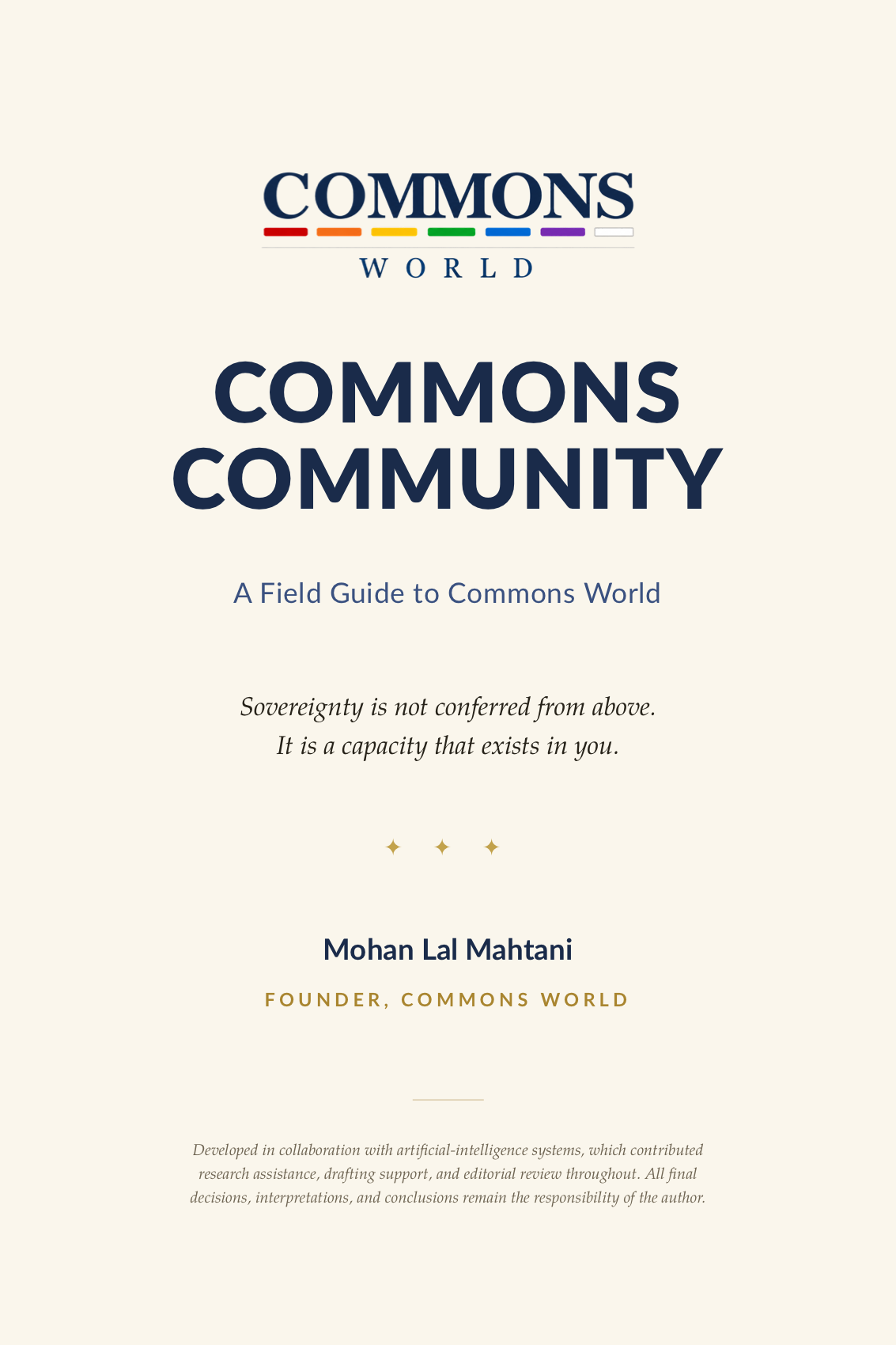
Commons Community is the short field guide to the format, the questions, and the practice. It is free to read and available under a licence that allows non-commercial copying, printing, translating, and sharing with attribution.